

Home
Page
STM32 Page
INDEX
INTRODUCTION
Tutorial
Evaluation Board
-
Third-party eval-board
STM32 Page
INDEX
STM32F4xx official page: http://www.st.com/internet/mcu/subclass/1521.jsp
Introduction
FPU - Floating point benefits
DSP - benefits
Price
Portfolio
Tutorial
Application Notes, Manuals, etc
Software Tools
Evaluation Board
Introduction
FPU - Floating point benefits
DSP - benefits
Price
Portfolio
Tutorial
Application Notes, Manuals, etc
Software Tools
Evaluation Board
- STM32446E-EVAL - Evaluation board with STM32F446ZE, it includes an ST-LINK/V2 embedded debug tool, a 3.2” 240 x 320 TFT LCD with resistive touchscreen, USB HS & FS, USART, IrDA, CAN, Digital Microphones, Audio Codec, ADC and DAC, SDRAM (4M x 16-bit) and QuadSPI Flash memories (32MB), I2C EEPROM, RF EEPROM, MicroSD card) and more.
- STM32F429I-DISCO - Based on the STM32F429ZIT6, it includes an ST-LINK/V2 embedded debug tool, a 2.4" QVGA TFT LCD, an external SDRAM of 64 Mbits, a gyroscope ST MEMs, a USB OTG micro-AB connector, LEDs and pushbuttons.
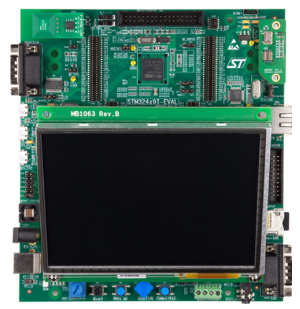
- STM32429I-EVAL1 - is a complete demonstration and development platform for the STMicroelectronics ARM®Cortex™-M4 core-based STM32F429 line microcontrollers. It includes a 4.3” color TFT LCD with resistive touchscreen (480 x 272 pixels), etc.
- STM32439I-EVAL2- Based on the STM32F439NIH6, it includes an ST-LINK/V2 embedded debug tool, a 5.7” color TFT LCD with capacitive touchscreen (480 x 272 pixels), an 8M x 32-bit SDRAM, 1M x 16-bit SRAM and 8M x 16-bit NOR Flash, a USB OTG micro-AB connector, LEDs and pushbuttons.
-
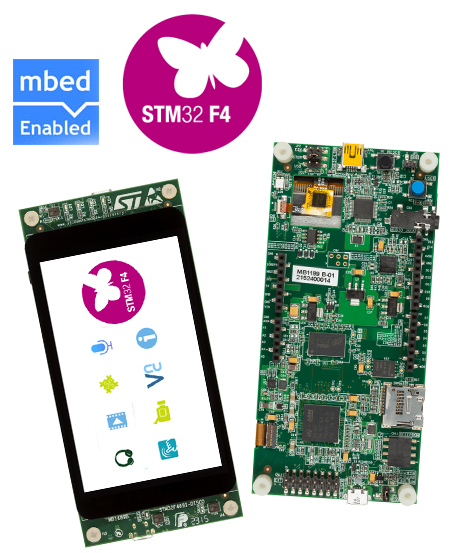
STM32F469I-DISCO - The discovery kit comes with a 4”, 800 x 480 pixel color touchscreen display based on high-speed MIPI DSI technology for a rich graphics experience.
With large embedded memories, the board offers 3 MEMs microphones, USB FS OTG, audio jack, and µSD card connector. - STM32F4-Discovery
- NUCLEO-F411RE - STM32 Nucleo development board for STM32F4 series - with STM32F411RE MCU, 512KB flash memory, TQFP64 package, it includes an ST-LINK/V2 embedded debug tool. Supports Arduino.
- NUCLEO-F401RE - STM32 Nucleo development board for STM32F4 series - with STM32F401RE MCU, TQFP64 package, it includes an ST-LINK/V2 embedded debug tool. Supports Arduino.
- NUCLEO-F446RE - STM32 Nucleo development board for STM32F4 series - with STM32F446RE MCU, 512KB flash memory, TQFP64 package, it includes an ST-LINK/V2 embedded debug tool. Supports Arduino .
-
STM & Embest STM32F4-Discovery expansion
boards
STM3240G-EVAL
STM3241G-EVAL
STM32F4
technical Overview
STM32F4 - Marketing presentation (pdf 4Mbyte)
Brochure
What is Cortex M4
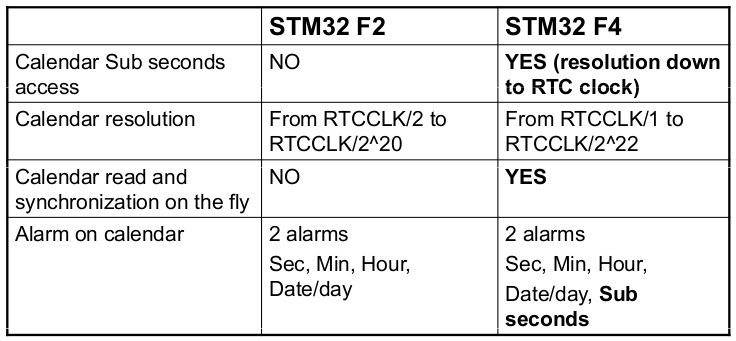
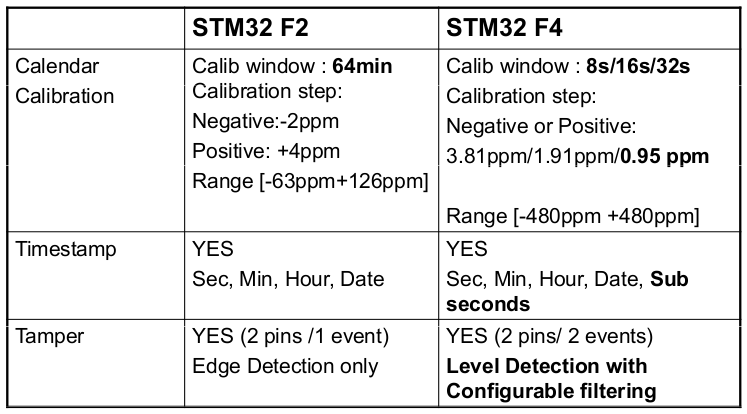
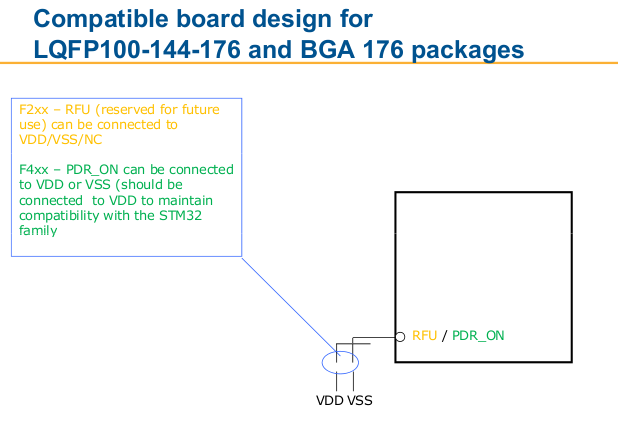
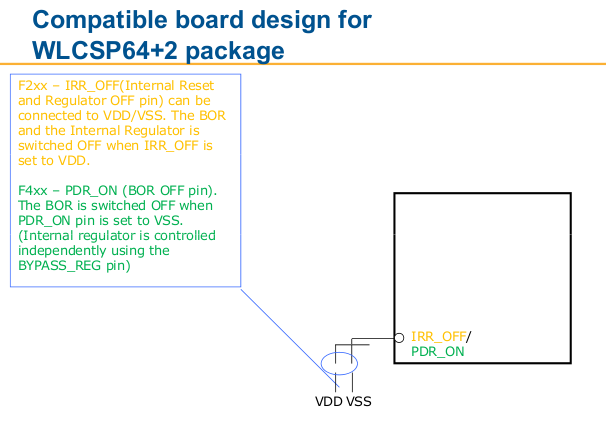
STM32F4xx vs. STM32F2xx
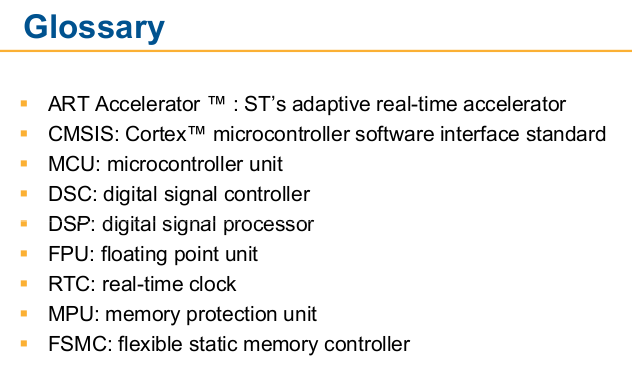
Glossary
STM32F4 - Marketing presentation (pdf 4Mbyte)
Brochure
What is Cortex M4
STM32F4xx vs. STM32F2xx
Glossary
INTRODUCTION
STM32F4 series of
high-performance MCUs with DSP and FPU instructions
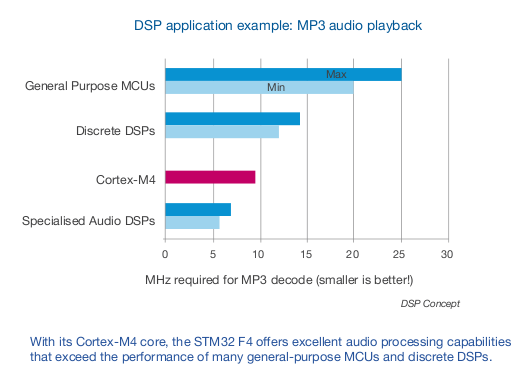
The ARM® Cortex®-M4-based STM32F4 series MCUs leverage ST’s NVM technology and ST’s ART Accelerator™ to reach the industry’s highest benchmark scores for Cortex-M-based microcontrollers with up to 225DMIPS 608CoreMark executing from Flash memory at up to 180 MHz operating frequency.
With dynamic power scaling, the current consumption running from Flash ranges from 100 µA/MHz on the STM32F411 up to 260 µA/MHz on the STM32F439.
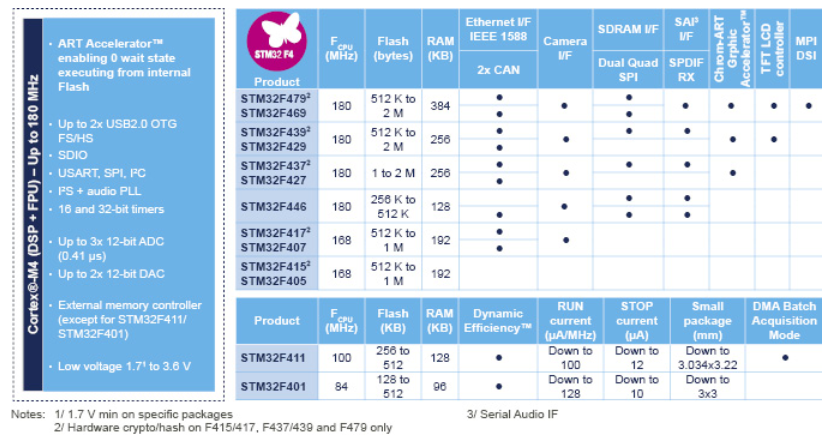
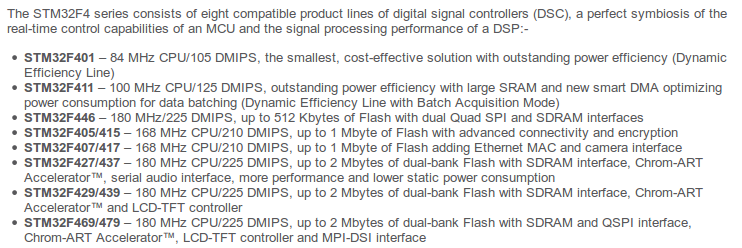
The STM32F4 series consists of seven compatible product lines of digital signal controllers (DSC), a perfect symbiosis of the real-time control capabilities of an MCU and the signal processing performance of a DSP:
The ARM® Cortex®-M4-based STM32F4 series MCUs leverage ST’s NVM technology and ST’s ART Accelerator™ to reach the industry’s highest benchmark scores for Cortex-M-based microcontrollers with up to 225DMIPS 608CoreMark executing from Flash memory at up to 180 MHz operating frequency.
With dynamic power scaling, the current consumption running from Flash ranges from 100 µA/MHz on the STM32F411 up to 260 µA/MHz on the STM32F439.
The STM32F4 series consists of seven compatible product lines of digital signal controllers (DSC), a perfect symbiosis of the real-time control capabilities of an MCU and the signal processing performance of a DSP:
- STM32F401 – 84 MHz CPU/105 DMIPS, the smallest, cost-effective solution with outstanding power efficiency (Dynamic Efficiency Line)
- STM32F411 – 100 MHz CPU/125 DMIPS, outstanding power efficiency with large SRAM and new smart DMA optimizing power consumption for data batching (Dynamic Efficiency Line with Batch Acquisition Mode)
- STM32F446 – 180 MHz/225 DMIPS, up to 512 Kbytes of Flash with dual Quad SPI and SDRAM interfaces
- STM32F405/415 – 168 MHz CPU/210 DMIPS, up to 1 Mbyte of Flash with advanced connectivity and encryption
- STM32F407/417 – 168 MHz CPU/210 DMIPS, up to 1 Mbyte of Flash adding Ethernet MAC and camera interface
- STM32F427/437 – 180 MHz CPU/225 DMIPS, up to 2 Mbytes of dual-bank Flash with SDRAM interface, Chrom-ART Accelerator™, serial audio interface, more performance and lower static power consumption
- STM32F429/439 – 180 MHz CPU/225 DMIPS, up to 2 Mbytes of dual-bank Flash with SDRAM interface, Chrom-ART Accelerator™ and LCD-TFT controller
- STM32F469/479 – 180 MHz CPU/225 DMIPS, up to 2 Mbytes of dual-bank Flash with SDRAM and QSPI interface, Chrom-ART Accelerator™, LCD-TFT controller and MPI-DSI interface
Tutorial
- Some important AN:
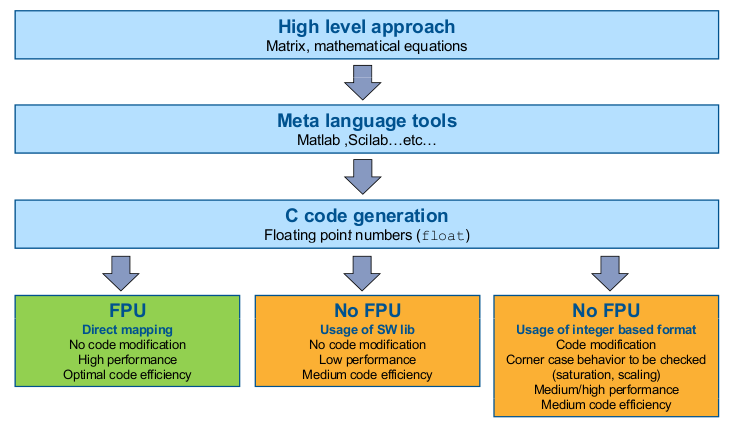
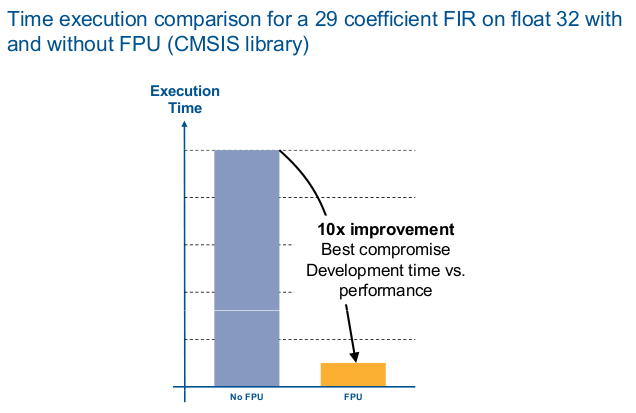
- Floating point unit demonstration on STM32 microcontrollers (AN4044)
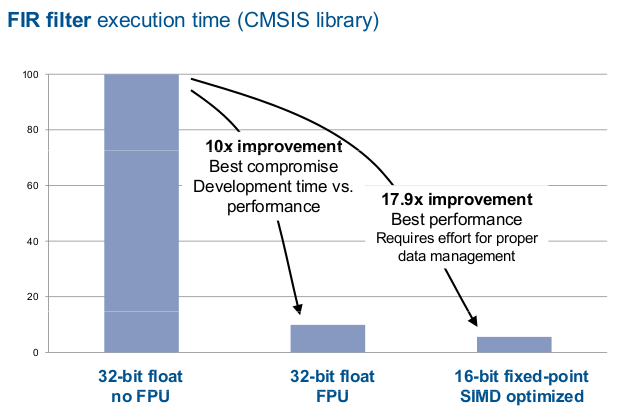
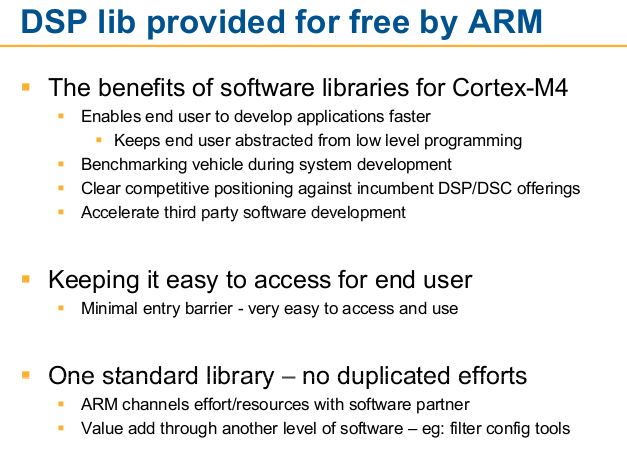
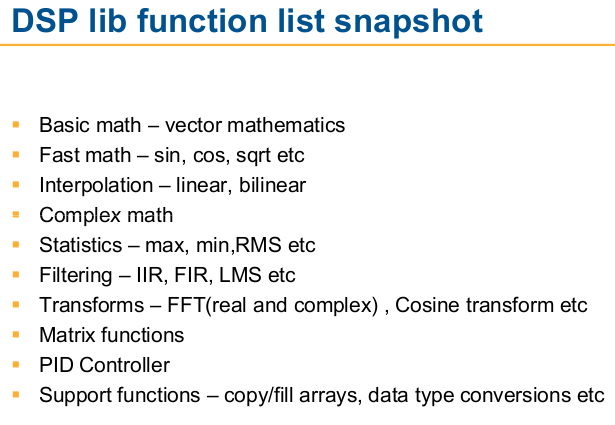
- Digital signal processing for STM32 microcontrollers using CMSIS (AN4841)
- Click Here for: see other STM32 examples
- Click Here for: Sliding gate with a Guillotine for secure lock, built using the: NUCLEO-F401RE + X-NUCLEO-PLC01A1 (PLC1 InPut/OutPut) + Mechanical of the Car Window motor
- Click Here for: How to start a new project on STM32F4 using CUBE, Library (HAL) and KEIL on NUCLEO-F401RE
- Click Here for: NUCLEO-F401RE and USB Virtual COM
- Click Here for: STM32F4-Discovery and USB Virtual COM
- Click Here for: STM32F429-Discovery and USB Virtual COM
- Click Here for: STM32F429-Discovery, USB Virtual COM and TFT
- Click Here for: STM32F4-Discovery + CUBE for configuration the Clock, the MCO2 and blinking LED
- Click Here for: How to use on STM32F429-Discovery the CAN1, SPI1, LEDs and Blue Button
- Click Here to
download the STM32 & USB
- Click Here for the: How to use the STM32F4 Library
- Click Here for
the: STM32F4-Discovery
EXE1 that explain how to use Atollic,
I/O, Interrupt, TIM3, TIM4, MEMS used for mouse emulation, USB, etc.
EXE1 is now available in RUSSIAN language. - Click Here for
the: EXE2 - FreeRTOS on STM32F4-Discovery
EXE2 (FreeRTOS) is now available in RUSSIAN language.
- Click Here for the: Simple LEDs test for STM32F4-Discovery (ref.cod. STM32F4-Discovery_LED_Keil)
- Click Here to
download the STM32F4 Graphics Workshop
(Tutorial, Examples, etc, the dimension is 1,2GB... be patient during
the download).
ATTENTION:
At the moment, the STM32F4 Graphics Workshop shall be issued only to SILICA customers.
If you are SILICA customer send me an email and ask me:
STM32F4 Graphics WorkshopIf you are STM customer please contact directly your local office of STM.
please specify also your City, Country and your contact in SILICA.
- Click Here for
get: Alfa examples for STM32F42x-TFT-RouMar13
EvaBoard.
ATTENTION:
At the moment, the STM32F42x-TFT-RouMar13 EvaBoard shall be issued only to SILICA customers.
If you are SILICA customer send me an email and ask me:
STM32F42x-TFT-RouMar13 EvaBoardIf you are STM customer please contact directly your local office of STM.
please specify also your City, Country and your contact in SILICA.
- Click Here for get: STM32F42xx_Technical_Presentation_w41
(2014).
ATTENTION:
At the moment, the STM32F42xx_Technical_Presentation_w41 shall be issued only to SILICA customers.
If you are SILICA customer send me an email and ask me:
STM32F42xx_Technical_Presentation_w41If you are STM customer please contact directly your local office of STM.
please specify also your City, Country and your contact in SILICA.
-
Software Tools
Software Tools
- CUBE - STM32 pin allocation, code
generator and more.
Is strongly recommended to use CUBE for develop a new project.
CUBE incluede: Pin allocation, FS, USB, Ethernet and more.
The CUBE use a new library that is not compatible with the previous one.
- STM32F4 DSP and standard peripherals library, including 82 examples for 26 different peripherals and template project for 5 different IDEs is here.
- Clock configuration tool for
STM32F40x/41x microcontrollers is here
- STM32F4 in-application programming (IAP) using the USART is here.
- EEPROM emulation in STM32F4
microcontrollers is here.
- STM32F105/7, STM32F2 and STM32F4 USB on-the-go Host and device library is here.
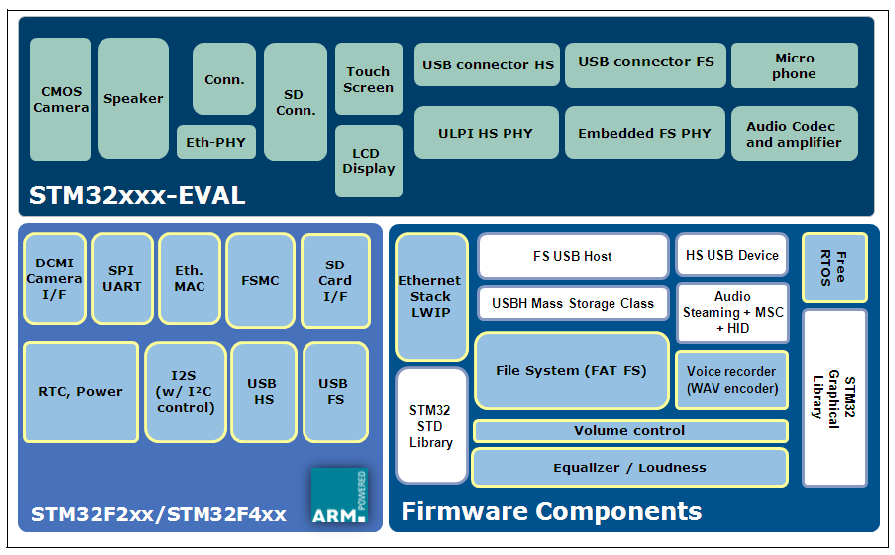
- STM32F2 and STM32F4 demostration builder
that include the below HW and SW resources.
- More software are available here and here.
Evaluation Board
-
STM32446E-EVAL - Evaluation board with STM32F446ZE
The STM32446E-EVAL helps
you to discover the high-performance microcontrollers of the STM32F446
series (Cortex M4) and to develop your applications easily. It offers
everything required for beginners and experienced users to get started
quickly.
Evaluation board with STM32F446ZE, it includes an ST-LINK/V2 embedded debug tool, a 3.2” 240 x 320 TFT LCD with resistive touchscreen, USB HS & FS, USART, IrDA, CAN, Digital Microphones, Audio Codec, ADC and DAC, SDRAM (4M x 16-bit) and QuadSPI Flash memories (32MB), I2C EEPROM, RF EEPROM, MicroSD card) and more.
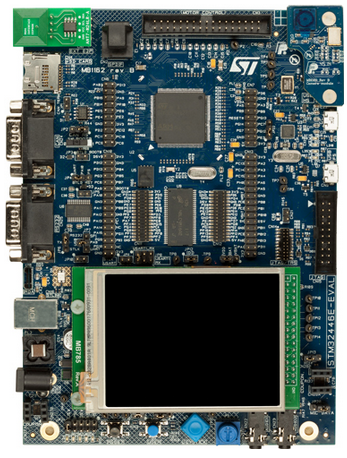
Evaluation board with STM32F446ZE, it includes an ST-LINK/V2 embedded debug tool, a 3.2” 240 x 320 TFT LCD with resistive touchscreen, USB HS & FS, USART, IrDA, CAN, Digital Microphones, Audio Codec, ADC and DAC, SDRAM (4M x 16-bit) and QuadSPI Flash memories (32MB), I2C EEPROM, RF EEPROM, MicroSD card) and more.
-
STM32F429I-DISCO
STM32429I-EVAL1
-
STM32439I-EVAL2
-
STM32F469I-DISCO
The STM32F469 Discovery kit (STM32F469I-DISCO) comes with a 4”, 800 x 480 pixel color touchscreen display based on high-speed MIPI DSI technology for a rich graphics experience.
With large embedded memories, the board offers 3 MEMs microphones, USB FS OTG, audio jack, and µSD card connector.
-
STM32F4-Discovery
STM32F429I-DISCO
The STM32F429
Discovery helps
you to discover the high-performance microcontrollers of the STM32F429
series (Cortex M4) and to develop your applications easily. It offers
everything required for beginners and experienced users to get started
quickly.
Based on the STM32F429ZIT6, it includes an ST-LINK/V2 embedded debug tool, a 2.4" QVGA TFT LCD, an external SDRAM of 64 Mbits, a gyroscope ST MEMs, a USB OTG micro-AB connector, LEDs and pushbuttons.
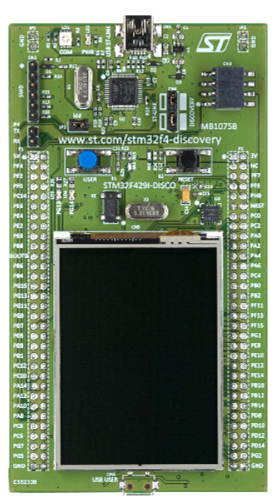
-Based on the STM32F429ZIT6, it includes an ST-LINK/V2 embedded debug tool, a 2.4" QVGA TFT LCD, an external SDRAM of 64 Mbits, a gyroscope ST MEMs, a USB OTG micro-AB connector, LEDs and pushbuttons.
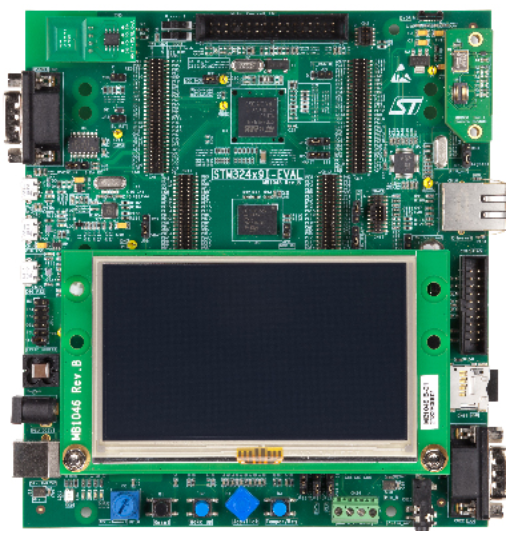
STM32429I-EVAL1
The
STM32429I-EVAL
evaluation board is a complete demonstration and development platform
for the STMicroelectronics ARM®Cortex™-M4 core-based STM32F429NIH6 line microcontrollers.
The integrated ST-LINK/V2 provides an embedded in-circuit debugger and programmer for the STM32 MCU.
Extension headers make it possible to easily connect a daughterboard for your specific application.
The STM32429I-EVAL evaluation board includes everything required for beginners and experienced users to develop applications quickly.
The integrated ST-LINK/V2 provides an embedded in-circuit debugger and programmer for the STM32 MCU.
Extension headers make it possible to easily connect a daughterboard for your specific application.
The STM32429I-EVAL evaluation board includes everything required for beginners and experienced users to develop applications quickly.
- STM32F429NIH6 microcontroller
- 4.3” color TFT LCD with resistive touchscreen (480 x 272 pixels)
- Six 5 V power supply options:
- Power jack
- ST-LINK/V2 USB connector
- User USB HS connector
- User USB FS1 connector
- User USB FS2 connector
- Daughterboard
- SAI Audio DAC, stereo audio jack which supports headset with microphone
- Stereo digital microphone, audio terminal connector used to connect external speakers
- 2 GBytes (or more) SDIO interface MicroSD card
- RF EEPROM on I2C compatible serial interface
- RS-232 communication
- IrDA transceiver
- JTAG/SWD and ETM trace debug support, ST-LINK/V2 embedded
- IEEE-802.3-2002 compliant Ethernet connector
- Camera module
- 8M x 32-bit SDRAM, 1M x 16-bit SRAM and 8M x 16-bit NOR Flash
- Joystick with 4-directional control and selector
- Reset, Wakeup and Tamper buttons
- 4 color user LEDs
- Extension connectors & memory connectors for daughterboard or wrapping board
- USB OTG HS and FS with Micro-AB connectors
- RTC with backup battery
- CAN2.0A/B compliant connection
- Potentiometer
- Motor control connector
-
STM32439I-EVAL2
The STM32439I-EVAL2
helps
you to discover the high-performance microcontrollers of the STM32F4
series (Cortex M4) and to develop your applications easily.
- STM32F439NIH6 microcontroller
- 5.7” color TFT LCD with capacitive touchscreen (480 x 272 pixels)
- Six 5 V power supply options: Power jackST-LINK/V2 USB connector User USB HS connectorUser USB FS1 connector User USB FS2 connector Daughterboard
- SAI Audio DAC, stereo audio jack which supports headset with microphone
- Stereo digital microphone, audio terminal connector used to connect external speakers
- 2 GBytes (or more) SDIO interface MicroSD card
- RF EEPROM - M24LRxx - on I2C compatible serial interface
- RS-232 communication
- IrDA transceiver
- JTAG/SWD and ETM trace debug support, ST-LINK/V2 embedded
- IEEE-802.3-2002 compliant Ethernet connector
- Camera module
- 8M x 32-bit SDRAM, 1M x 16-bit SRAM and 8M x 16-bit NOR Flash
- Joystick with 4-directional control and selector
- Reset, Wakeup and Tamper buttons
- 4 color user LEDs
- Extension connectors & memory connectors for daughterboard or wrapping board
- USB OTG HS and FS with Micro-AB connectors
- RTC with backup battery
- CAN2.0A/B compliant connection
- Potentiometer
- Motor control connector
STM32F469I-DISCO
The STM32F469 Discovery kit (STM32F469I-DISCO) comes with a 4”, 800 x 480 pixel color touchscreen display based on high-speed MIPI DSI technology for a rich graphics experience.
With large embedded memories, the board offers 3 MEMs microphones, USB FS OTG, audio jack, and µSD card connector.
STM32F4-Discovery
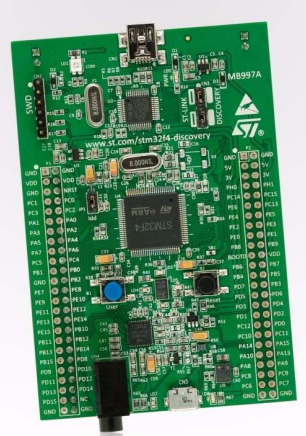
The STM32F4-DISCOVERY helps you to discover the
STM32F4 high-performance features and to develop your applications
easily.
It includes everything required for beginners and experienced users to get started quickly.
Based on the STM32F407VGT6, it includes an ST-LINK/V2 embedded debug tool, two ST MEMS, digital accelerometer and digital microphone, one audio DAC with integrated class D speaker driver, LEDs and push buttons and an USB OTG micro-AB connector.
It includes everything required for beginners and experienced users to get started quickly.
Based on the STM32F407VGT6, it includes an ST-LINK/V2 embedded debug tool, two ST MEMS, digital accelerometer and digital microphone, one audio DAC with integrated class D speaker driver, LEDs and push buttons and an USB OTG micro-AB connector.
-
NUCLEO-F411RE
NUCLEO-F401RE
STM & Embest
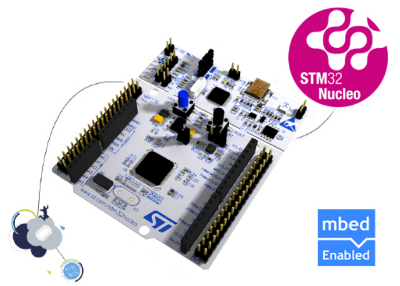
NUCLEO-F411RE
STM32
Nucleo development board for STM32F4 series - with STM32F411RE MCU, 512KB flash memory,
TQFP64 package, it includes an ST-LINK/V2 embedded debug tool. Supports Arduino
-NUCLEO-F401RE
STM32
Nucleo development
board for STM32F4 series - with STM32F401RE
MCU, TQFP64 package, it includes an ST-LINK/V2 embedded debug tool. Supports Arduino
UP
-
NUCLEO-F446RE
--
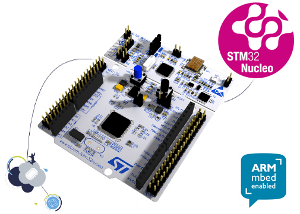
NUCLEO-F446RE
STM32
Nucleo development
board for STM32F4 series - with STM32F446RE
MCU, TQFP64 package, it includes an ST-LINK/V2 embedded debug tool. Supports Arduino
STM & Embest
If
you want to try Camera, LCD Display, Ethernet and Micro SD can
help you realize these functions.
See STM - STM32F4DIS-EXT: http://www.st.com/internet/evalboard/product/255417.jsp
Software examples for Ethernet (LWIP_v1.3.2 protocol stack), Camera, LCD Display, FFT/FPU, SDIO (FatFs_vR0.08a file system) , USART, uC/OS-II, USB Device and Host are here.
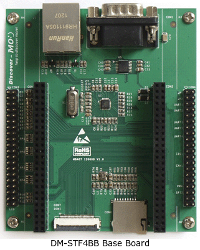
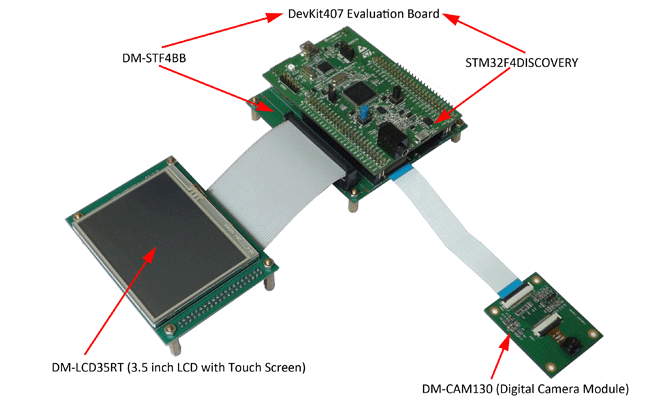
See STM - STM32F4DIS-EXT: http://www.st.com/internet/evalboard/product/255417.jsp
The
doc is here.
See Embest DM-STF4BB:
http://www.embedinfo.com/english/product/DM-STF4BB.aspSoftware examples for Ethernet (LWIP_v1.3.2 protocol stack), Camera, LCD Display, FFT/FPU, SDIO (FatFs_vR0.08a file system) , USART, uC/OS-II, USB Device and Host are here.
-
STM3240G-EVAL
STM3240G-EVAL
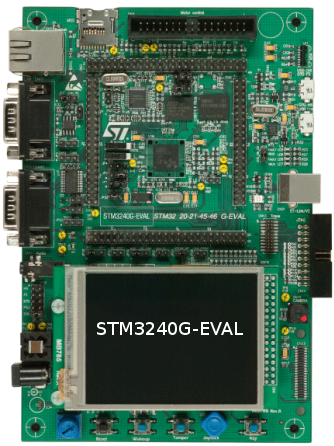
The STM3240G-EVAL evaluation board is a complete
demonstration and development platform for the STM32 F4 series and
includes an STM32F407IGH6
high-performance ARM®Cortex™-M4F 32-bit microcontroller.
The full range of hardware features on the board is provided to help you evaluate all peripherals (USB OTG HS, USB OTG FS, Ethernet, motor control, CAN, MicroSD card, smartcard, USART, Audio DAC, RS-232, IrDA, SRAM, MEMS, EEPROM… etc.) and develop your own applications.
The in-circuit ST-LINK/V2 tool can be easily used for JTAG and SWD interface debugging and programming.
The full range of hardware features on the board is provided to help you evaluate all peripherals (USB OTG HS, USB OTG FS, Ethernet, motor control, CAN, MicroSD card, smartcard, USART, Audio DAC, RS-232, IrDA, SRAM, MEMS, EEPROM… etc.) and develop your own applications.
The in-circuit ST-LINK/V2 tool can be easily used for JTAG and SWD interface debugging and programming.
-
STM3241G-EVAL
STM3241G-EVAL
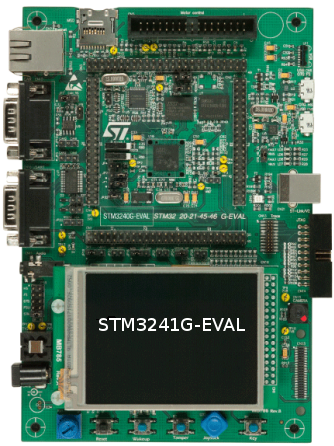
The STM3241G-EVAL evaluation board is a complete
demonstration and development platform for the STM32 F4 series and
includes an STM32F417IGH6
high-performance ARM®Cortex™-M4F 32-bit microcontroller.
The full range of hardware features on the board is provided to help you evaluate all peripherals (USB OTG HS, USB OTG FS, Ethernet, motor control, CAN, MicroSD card, smartcard, USART, Audio DAC, RS-232, IrDA, SRAM, MEMS, EEPROM… etc.) and develop your own applications.
The in-circuit ST-LINK/V2 tool can be easily used for JTAG and SWD interface debugging and programming.
The full range of hardware features on the board is provided to help you evaluate all peripherals (USB OTG HS, USB OTG FS, Ethernet, motor control, CAN, MicroSD card, smartcard, USART, Audio DAC, RS-232, IrDA, SRAM, MEMS, EEPROM… etc.) and develop your own applications.
The in-circuit ST-LINK/V2 tool can be easily used for JTAG and SWD interface debugging and programming.
Third-party eval-board
UP
What is Cortex M4
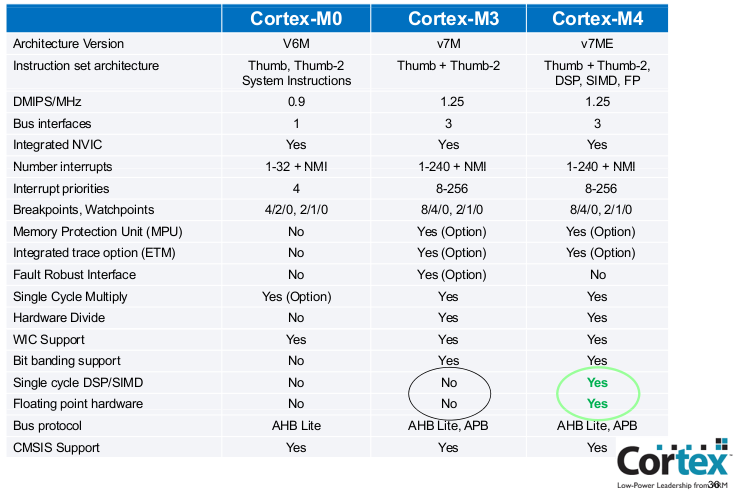
The Cortex-M family is an ideal solution for ranges of compatible, easy to use embedded devices such as microcontrollers (MCU) where different cost, power and performance considerations must be made. Each processor delivers an optimal trade-off for a broad embedded application range.

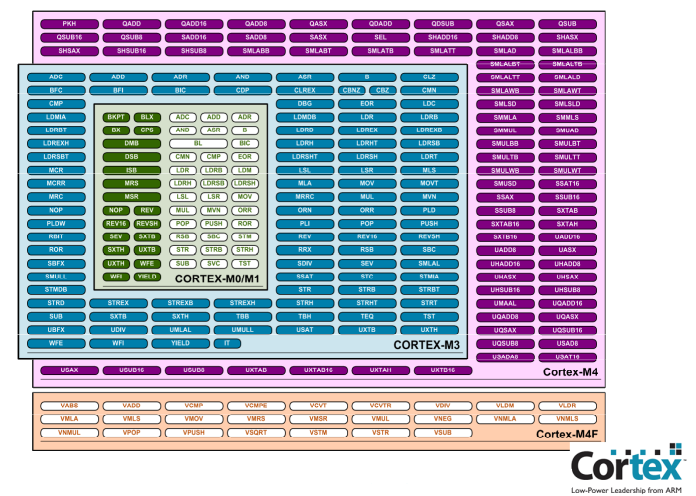
Cortex-M family processors are all binary upwards compatible, enabling software reuse and a seamless progression from one Cortex-M processor to another.
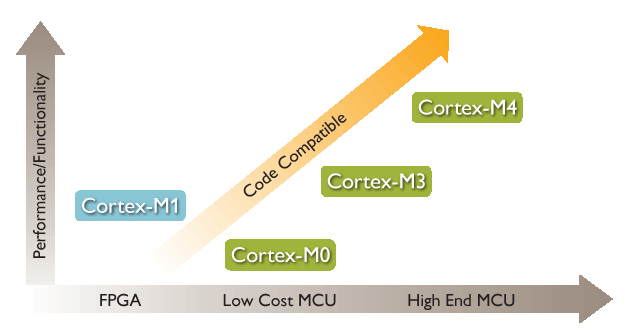
The ARM Cortex™-M4 processor is the latest embedded processor by ARM specifically developed to address digital signal control markets that demand an efficient, easy-to-use blend of control and signal processing capabilities.
The combination of high-efficiency signal processing functionality with the low-power, low cost and ease-of-use benefits of the Cortex-M family of processors is designed to satisfy the emerging category of flexible solutions specifically targeting the motor control, automotive, power management, embedded audio and industrial automation markets.
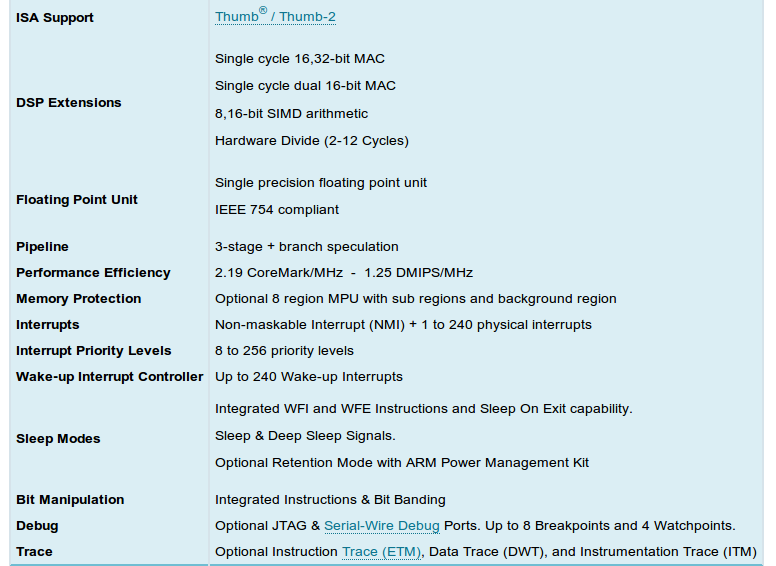
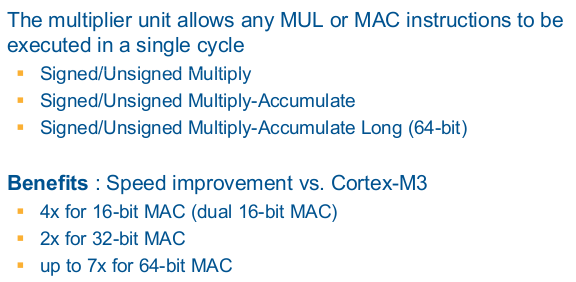
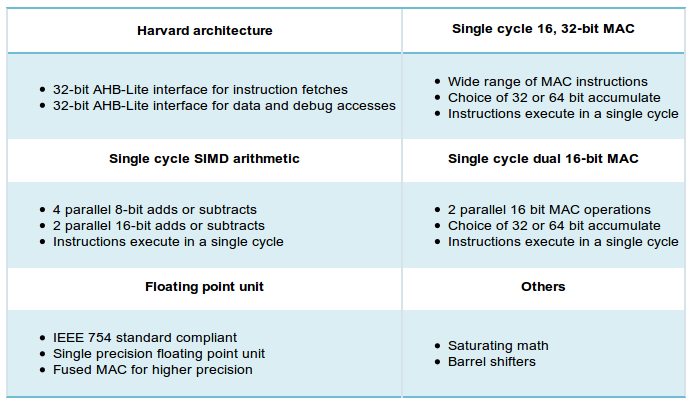
The Cortex-M4 processor has been designed with a large variety of highly efficient signal processing features applicable to digital signal control markets. The Cortex-M4 processor features extended single-cycle multiply-accumulate (MAC) instructions, optimized SIMD arithmetic, saturating arithmetic instructions and an optional single precision Floating Point Unit (FPU).
These features build upon the innovative technology that characterizes the ARM Cortex-M series processors.
UP
UP
UP
What is Cortex M4
The Cortex-M family is an ideal solution for ranges of compatible, easy to use embedded devices such as microcontrollers (MCU) where different cost, power and performance considerations must be made. Each processor delivers an optimal trade-off for a broad embedded application range.
Cortex-M family processors are all binary upwards compatible, enabling software reuse and a seamless progression from one Cortex-M processor to another.
The ARM Cortex™-M4 processor is the latest embedded processor by ARM specifically developed to address digital signal control markets that demand an efficient, easy-to-use blend of control and signal processing capabilities.
The combination of high-efficiency signal processing functionality with the low-power, low cost and ease-of-use benefits of the Cortex-M family of processors is designed to satisfy the emerging category of flexible solutions specifically targeting the motor control, automotive, power management, embedded audio and industrial automation markets.
The Cortex-M4 processor has been designed with a large variety of highly efficient signal processing features applicable to digital signal control markets. The Cortex-M4 processor features extended single-cycle multiply-accumulate (MAC) instructions, optimized SIMD arithmetic, saturating arithmetic instructions and an optional single precision Floating Point Unit (FPU).
These features build upon the innovative technology that characterizes the ARM Cortex-M series processors.
UP
UP
UP